
20 Top careers for school leavers and what UK Universities to go to. 

As a school leaver, deciding on the right career path can be overwhelming. With so many industries and sectors to choose from, it can be challenging to know where to start. In this post, we’ll take a look at the top 20 industries and sectors that school leavers commonly start their careers in and suggest some suitable universities for each industry.

  1. Accounting and Finance: The University of Warwick has a highly respected Accounting and Finance program, as does the University of Manchester and the London School of Economics.
  2. Advertising and Marketing: For Advertising and Marketing, the University of Leeds, the University of Manchester, and the University of Nottingham are all excellent options.
  3. Agriculture: The University of Reading is known for its strong agricultural program, as is Harper Adams University.
  4. Arts and Culture: The University of Edinburgh and the University of Glasgow are two well-regarded options for those interested in pursuing a career in Arts and Culture.
  5. Business: The University of Bath, the University of Leeds, and the University of Manchester are all excellent choices for those looking to start a career in business.
  6. Construction: The University of Surrey, the University of Nottingham, and the University of Leeds all have highly respected construction programs.
  7. Education: For those interested in Education, the University of Durham, the University of Exeter, and the University of Nottingham are all highly regarded institutions.
  8. Engineering: Imperial College London, the University of Manchester, and the University of Bristol are all highly respected universities for Engineering.
  9. Environmental Management: The University of Leeds, the University of East Anglia, and the University of Exeter all have highly regarded Environmental Management programs.
  10. Healthcare: The University of Bristol, the University of Leeds, and the University of Manchester all have highly respected programs for Healthcare.
  11. Hospitality and Tourism: For those interested in Hospitality and Tourism, the University of Surrey, the University of Leeds, and the University of Birmingham are all excellent choices.
  12. Information Technology: The University of Warwick, the University of Manchester, and the University of Nottingham are all highly respected universities for Information Technology.
  13. Law: The University of Durham, the University of Bristol, and the University of Nottingham are all highly regarded institutions for Law.
  14. Media and Communications: The University of Leeds, the University of Nottingham, and the University of Sheffield all have highly respected Media and Communications programs.
  15. Pharmaceuticals: The University of Manchester, the University of Nottingham, and the University of Bristol are all excellent choices for those interested in pursuing a career in Pharmaceuticals.
  16. Politics: The University of Oxford, the University of Manchester, and the London School of Economics are all highly respected universities for Politics.
  17. Public Relations: The University of Leeds, the University of Manchester, and the University of Nottingham all have highly regarded Public Relations programs.
  18. Retail: The University of Leeds, the University of Manchester, and the University of Nottingham are all excellent choices for those looking to start a career in Retail.
  19. Science: The University of Warwick, the University of Manchester, and Imperial College London are all highly respected universities for Science.
  20. Social Work: The University of Bristol, the University of Leeds, and the University of Manchester all have highly respected programs for Social Work.

In conclusion, the industries and sectors listed above provide a starting point for school leavers interested in exploring their career options. While Oxford and Cambridge universities are highly regarded for many fields, there are many excellent universities in the UK that offer top-quality programs in a variety of industries and sectors. If you want to do more research, I have posted about “The Top 10 UK University Search Engines for School Leavers” I hope that it helps.

#NavigatingYourCareer #CareerPaths #UniversityOptions #SchoolLeaversUK #TopIndustries #UKUniversities #FutureCareers #ChoosingYourPath #ExploringOptions #navigatingyourcareer

Mastering Your Job Interview: Answering 3 Most Common Questions with Confidence

As a school leaver or young adult entering the workforce, job interviews can be intimidating. However, being prepared and confident can increase your chances of success. In this post, we will cover three of the most common interview questions and provide tips on how to answer them effectively.

  1. “Why do you want to be in this industry or sector?” This question is an opportunity for you to communicate your enthusiasm for the industry or sector. Employers want to hire candidates who are passionate about the work they do and are committed to learning and growing in their roles. To answer this question, do some research on the company and industry you’re applying to. Identify the company’s goals and values, and think about how they align with your interests and career aspirations (if you have difficulties identifying you passions and interest, try answering my 5 questions here). Highlight any previous experience or education related to the industry or sector, and mention any hobbies or extracurricular activities that demonstrate your passion for the field.
  2. “What makes you ideal for this position?” When answering this question, focus on your unique skills and experiences that make you stand out from other candidates. Use the job description as a guide to identify the key skills and qualities that the employer is looking for. In addition to your technical skills and experience, think about other qualities that make you an ideal candidate. Provide specific examples of times when you have demonstrated these qualities in the workplace or in other contexts.
  3. “Why do you want to come and work for us?” This question is all about demonstrating your knowledge of the company and your interest in the position. Research is critical when answering this question. Familiarize yourself with the company’s mission, values, and culture, and think about how you can contribute to their success. Be specific about what you like about the company and how it aligns with your career goals. Reference recent company news or events, or mention specific aspects of the company culture that appeal to you. If you have any relevant connections to the company or industry, be sure to mention them as well.

By answering these common interview questions with confidence and authenticity, you can demonstrate your value as a candidate and increase your chances of landing your dream job. Remember to prepare ahead of time, practice with a friend or family member, and show up to the interview with a positive attitude and professional demeaner.

I hope this has helped good luck and please see some of my other articles to help you get you dream job.

#interviewtips #careersuccess #jobsearch #careeradvice #interviewquestions #jobinterview #jobseekers #jobhunting #careerdevelopment #careerjourney

What Employers Really Want: A Guide for School Leavers

Congratulations on completing your schooling and taking the first steps towards your career! As you begin your job search, it’s important to understand what employers are looking for in school leavers. By knowing what skills and qualities are in demand, you can tailor your job search and make yourself a more attractive candidate.

Here are some of the top skills and qualities that employers are looking for in school leavers:

  1. Strong Work Ethic: Employers want to hire candidates who are reliable, responsible, and hardworking. They want to know that you will show up on time, meet deadlines, and put in the effort required to get the job done.
  2. Adaptability: In today’s rapidly changing work environment, employers want employees who can adapt to new technologies, processes, and challenges. They want to hire candidates who are flexible, open-minded, and willing to learn.
  3. Communication Skills: Strong communication skills are essential in almost every job. Employers want candidates who can communicate clearly and effectively, both verbally and in writing.
  4. Teamwork: Most jobs require working with others to achieve common goals. Employers want candidates who can work well in a team, collaborate with others, and contribute to a positive work environment.
  5. Problem-Solving Skills: Employers want employees who can identify problems, analyse information, and develop effective solutions. They want candidates who can think critically and creatively to solve complex problems.
  6. Positive Attitude: Employers want to hire candidates who are optimistic, enthusiastic, and have a can-do attitude. A positive attitude can help you stand out from other candidates and make a strong impression on potential employers.

By developing these skills and qualities, you can make yourself a more attractive candidate to potential employers. Consider how you can demonstrate these skills in your job search and in your everyday life.

Here are some tips to help you showcase your skills to potential employers:

  • Highlight your skills and experience on your resume and cover letter.
  • Prepare examples of times when you demonstrated these skills in previous jobs, volunteer work, or extracurricular activities.
  • Practice your interview skills and be prepared to discuss how you can contribute to the employer’s goals.
  • Network with professionals in your desired industry to learn more about what skills and qualities are in demand.
  • Consider further education or training to develop new skills and make yourself a more competitive candidate.

Remember, finding the right job takes time and effort, but by understanding what employers are looking for, you can position yourself for success.

#careeradvice #jobsearch #schoolleavers #jobskills #employability #jobmarket #jobhunting #jobinterview #jobapplication

Your Career Journey: From School to Success

Congratulations on graduating from school and taking the first steps towards your future career! As a school leaver, you may be feeling overwhelmed by the number of options available and unsure of where to start. That’s why we’ve put together this guide to help you navigate the working world, find the job that’s right for you, and take the first steps on your career journey. From getting part-time work experience to networking with industry professionals, we’ve got you covered.

  1. Get Part-Time Work Experience Getting part-time work experience in the field you’re interested in is a great way to learn more about the industry, gain valuable experience, and make connections. But don’t limit yourself to traditional jobs – consider volunteer work, internships, or even job shadowing opportunities. These experiences can help you stand out to potential employers and give you a better understanding of what it’s like to work in your chosen field.
  2. Take Advantage of Career Guidance Services Your school or local job centre can offer career guidance services to help you identify your strengths, skills, and interests, and connect you with job opportunities. They can also provide advice on education and training options that will help you pursue your chosen career path. Don’t be afraid to ask for help and guidance – it could be the key to unlocking your potential.
  3. Consider Further Education or Training Further education or training, such as vocational courses or apprenticeships, can give you the skills and qualifications you need to stand out to potential employers. Not only will you gain practical experience, but you’ll also earn while you learn. This can give you a head start on your career journey and help you become an attractive candidate for future job opportunities.
  4. Network, Network, Network Networking is a powerful tool for building connections and finding job opportunities. Attend events, join professional organizations, and reach out to people in your desired industry for advice and insights. Building a strong network can help you stay informed about the latest industry developments and potentially open doors to future job opportunities.
  5. Stay Informed and Up-to-Date Staying informed about industry news, trends, and technology is essential for staying competitive in your field. Subscribe to trade publications, follow industry leaders on social media, and attend conferences or workshops to gain knowledge and insights that will make you an attractive candidate for future job opportunities.

Remember, finding the right job takes time and effort, but by following these tips, you’ll be on your way to success. Whether you’re a school leaver, first-time job seeker, or teenager looking to start your career journey, the key is to stay focused, remain open to new opportunities, and never stop learning.

#careeradvice #jobsearch #firsttimejobseeker #youngprofessionals #schoolleavers #networking #futurecareer #vocationaleducation #apprenticeships #careerdevelopment

Dream Big: How Sleep Impacts Your Exam Performance

As a school leaver, you’re likely facing the pressure of exams and the stress that comes along with them. While you may be tempted to sacrifice sleep for more study time, it’s important to remember that sleep plays a crucial role in exam success. Here’s why getting enough sleep should be a top priority during this time.

  1. Enhance focus and attention: A good night’s sleep can help you feel more alert and ready to tackle exams. Improved focus and attention will help you stay focused during exams and avoid distractions.
  2. Boost memory and recall: Sleep plays a crucial role in memory consolidation and recall. By getting enough sleep, you can improve your ability to retain information and perform better on exams.
  3. Reduce stress and prevent burnout: Exam stress can take a toll on both your mental and physical health. Sleep is essential for reducing stress and preventing burnout. By getting enough sleep, you can feel less anxious and more motivated during exam time.
  4. Improve mood and well-being: Sleep can also improve your mood and overall well-being. By getting enough sleep, you’ll feel happier, more energized, and more motivated during exam time.
  5. Promote physical health: Sleep is also crucial for physical health. By getting enough sleep, you can keep your immune system strong, improve energy levels, and avoid burnout.

To get the best results, aim for 7-9 hours of sleep per night. Remember, sleep is just as important as study time, so prioritize it accordingly. Don’t sacrifice sleep for more study time – it’s essential for your success!

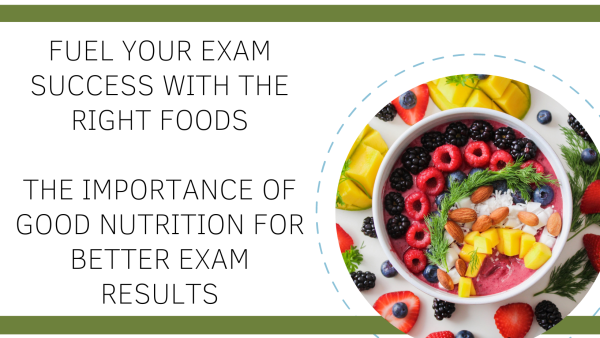
Fuel Your Exam Success with the Right Foods: The Importance of Good Nutrition for Better Exam Results

Starting your career on the right foot begins with acing your exams. But, how can you ensure that you’re performing at your best come exam day? By fuelling your body with the right foods. In this blog, we’ll explore how eating nutritious food can help you feel better, be more focused, and improve your exam results, and why you should avoid junk food and sugary drinks, especially before exams.

  1. Boost Your Energy: A healthy, balanced diet provides the energy you need to tackle your exams and perform at your best. Eating nutritious foods like fruits, vegetables, whole grains, and lean proteins can help you feel more alert, focused, and ready to ace your exams.
  2. Improve Mental Health: Good nutrition can also help improve your mental health, reducing stress and anxiety levels, which can negatively impact exam performance. Foods high in omega-3 fatty acids, such as salmon and walnuts, can help improve mood and focus.
  3. Avoid “Brain Drain”: Junk food and sugary drinks can have a negative impact on your energy levels and mental focus, leading to a “brain drain” during exams. To avoid this, choose nutritious, whole foods instead.
  4. Stay Hydrated: Staying hydrated is key to a healthy, functioning body and mind, especially during exams. Drinking plenty of water can help improve focus, memory, and overall cognitive function. Avoid sugary drinks, which can lead to a sugar crash, and opt for water or unsweetened drinks instead.
  5. Set Yourself Up for Exam Success: Eating nutritious food and avoiding junk food and sugary drinks sets you up for exam success. Not only will you feel better, but you’ll also perform better on exams, improving your chances of achieving the grades you need to kickstart your career.

Conclusion: Good nutrition is essential for both your physical and mental health, especially during exam time. By fuelling your body with the right foods, you can improve your exam performance and set yourself up for a successful career. So, skip the junk food and sugary drinks, and choose nutritious, whole foods instead. Your body, mind, and future self will thank you.

Exam Success Secret: How Exercise Can Boost Your Performance

Exams can be overwhelming and stressful, but did you know that taking care of your body can actually help you do better on exams? Regular breaks and physical activity are not only beneficial for your mental health, but also for your exam performance. Read on to discover why movement matters for exam success:

  1. Beat Exam Stress: Exercise is a natural stress-reliever. Even a quick walk can make you feel more relaxed and refreshed, so you can tackle exams with a clear mind.
  2. Enhance Focus and Retention: Physical activity has been proven to improve focus and cognitive function, which means you’ll remember information better and perform better on exams.
  3. Improve Memory: Exercise helps boost blood flow to the brain, which delivers oxygen and nutrients to improve memory function. So, if you want to ace your exams, make sure to hit the gym or go for a run.
  4. Get a Boost of Energy: Spending time outdoors, breathing in fresh air, and getting some sunlight can help you feel more alert and focused. This is especially important during exam season, when you need all the energy you can get.
  5. Find Balance: Taking breaks from studying and getting active can help you find balance in your life, avoiding burnout and allowing you to return to your studies with a fresh perspective.

In conclusion, incorporating physical activity into your exam routine can help you relieve stress, improve focus and memory, and have fun. So next time you’re feeling overwhelmed, hit the gym or go for a walk – your body and mind will thank you.

The Ultimate Guide to Achieving a Stress-Free Exam Season

Exams can be a major source of stress and anxiety, especially for school leavers preparing for their career path. But the good news is, there are effective ways to manage exam stress and anxiety. Here’s a comprehensive guide on how to tackle exams with ease:

  1. Get Organized: Create a study schedule and stick to it. This will help you feel more in control and reduce exam-related stress. Don’t forget to take regular breaks to recharge your batteries.
  2. Get Moving: Physical activity is a proven stress-reliever. Whether it’s a quick walk, light stretching, or a full-blown workout, moving your body will help you manage exam stress and anxiety.
  3. Fuel up Right: Eating nutritious food is crucial to help you feel focused and energized. Avoid junk food and sugary drinks, especially before exams.
  4. Get Your Z’s: Sleep is essential for your mental and physical health. Aim for 7-9 hours of sleep per night to feel refreshed and ready for exams.
  5. Talk to Someone: If you’re feeling overwhelmed, talking to someone you trust can be a big help. This could be a friend, family member, teacher, or even a counsellor.
  6. Mindfulness Matters: Mindfulness is about being present and not dwelling on the future or past. Practice mindfulness by meditating, deep breathing, or simply focusing on your senses.
  7. Practice Self-Care: Taking care of yourself is vital, especially during exam time. Find activities that make you happy and do more of them, whether it’s reading a book, watching a movie, or doing something creative. Taking care of yourself will help you feel relaxed and better equipped to handle exams.
  8. Experiment and Find What Works for You: Everyone is different, so what works for one person may not work for another. Experiment and find what helps you manage exam stress and anxiety effectively.

Remember, exams are just a small part of your life and don’t define you. You got this! If you need help, don’t hesitate to reach out for support. stay tuned as I will be posting about each point, expanding on how you could achieve each one.

No Experience? No Problem: How to Create a CV That Gets Results as a School Leaver

As a teenager, entering the workforce for the first time can be a daunting task. You may not have much work experience, but that doesn’t mean you can’t create a CV that will make you stand out. Here are five tips to help you create a winning CV as a teenager leaving school:

  1. Highlight any relevant coursework or education. Even if you haven’t had a job yet, your education is still valuable and can show potential employers that you have the skills and knowledge they’re looking for. Be sure to include any relevant coursework, grades, and qualifications you’ve earned.
  2. Include any volunteer experience. If you haven’t had a paid job, volunteer work can still demonstrate your work ethic and commitment. Include any volunteer experience you’ve had and the responsibilities you had.
  3. List any extracurricular activities or hobbies that are relevant to the job you’re applying for. For example, if you’re applying for a job in customer service, you could mention that you were part of your school’s debate team or that you volunteer at a local charity shop. These activities can show that you have transferable skills that employers are looking for.
  4. Be honest about your lack of experience and highlight your willingness to learn. Employers will understand that you may not have a lot of work experience, but they will appreciate that you are willing to learn and grow. Be sure to mention your enthusiasm and willingness to learn in your CV.
  5. Use a professional CV format and be sure to proofread it. Even if you don’t have much experience, you can still make a great first impression with a well-written and well-formatted CV. Use a professional CV format and be sure to proofread it multiple times to avoid any errors.

Keep in mind, it is important to tailor your CV to the specific job you are applying for and focus on the skills and qualifications that are required for the role. Also don’t be afraid to ask for help, career counsellors or mentors can help you to create a CV that stands out.

Creating a CV as a teenager leaving school can seem overwhelming, but by following these tips, you can create a CV that will make you stand out from the competition and get you one step closer to landing your first job.

Website Powered by WordPress.com.

Up ↑