Nail Your Job Interview: The 5 Tips That Make a Difference

Insights from a Career Coach and a Serial Interviewee

Are you getting sweaty palms just thinking about your next job interview? Don’t worry, you’re not alone. Even seasoned professionals can get nervous and make mistakes when facing a hiring manager. But there are ways to boost your chances of acing the interview and landing the job you want. As a career coach with years of experience, I’ve seen what works and what doesn’t in the interview room. But I’ve also been on the other side of the table more times than I care to admit. So, let me share with you the 5 tips that I believe can make a significant difference in your interview performance.

  1. Research the company and the role Don’t go into an interview blind. Do your homework and learn as much as you can about the company’s history, culture, products, and services. Also, review the job description and make a list of the skills and qualifications that the employer is looking for. Then, prepare examples of how your experience and achievements match those requirements. According to a survey conducted by Harris Poll, 50% of hiring managers claimed that candidates who are well-prepared for an interview are more likely to receive a job offer.
  2. Practice your answers While you can’t predict all the questions that you’ll be asked, you can prepare some standard responses to common ones, such as “Tell me about yourself,” “Why do you want to work here?” and “What are your strengths and weaknesses?” Practice these answers out loud, with a friend or a mirror, and try to be concise, relevant, and confident.
  3. Dress for success You don’t need to wear a three-piece suit to every interview, but you do need to look professional and polished. Choose clothes that fit well, are clean and pressed, and match the industry and the company’s dress code. Avoid flashy accessories or strong perfumes/colognes, as they can distract or irritate the interviewer. In a survey conducted by CareerBuilder, 78% of hiring managers said that a candidate’s attitude can impact their hiring decision.
  4. Ask smart questions An interview is not just a chance for the employer to evaluate you, but also for you to evaluate the employer and the job. Use this opportunity to ask questions that show your interest, curiosity, and strategic thinking. For example, “What are the biggest challenges that this department is facing?” “What is the career path for this role?” “How does this company foster diversity and inclusion?” According to a survey conducted by Glassdoor, 84% of interviewees who ask insightful questions during an interview are more likely to be offered the job.
  5. Follow up with gratitude After the interview, don’t just wait for the phone to ring. Take the initiative to send a thank-you note or email to the interviewer, expressing your appreciation for their time and reiterating your interest in the job. This gesture not only shows your politeness and professionalism but also reminds the employer of your strengths and enthusiasm. A study by CareerBuilder found that 22% of hiring managers are less likely to hire a candidate who doesn’t follow up after an interview.

Of course, these tips are not fool proof, and every interview is different. But by applying them, you can increase your chances of making a positive impression, building rapport with the interviewer, and standing out from the competition. And remember, even if the interview doesn’t lead to a job offer, it can still be a valuable learning experience that helps you grow and improve. So, keep practicing, keep smiling, and keep the faith. Good luck!

Hashtags: #jobinterviewtips #interviewsuccess #careercoach #interviewhacks #jobsearch #interviewprep #gethired #interviewstrategies #interviewconfidence #interviewmistakes

10 In-Demand Careers for future School Leavers

Are you a school leaver wondering what career path to pursue? Or a parent looking to guide your child towards a stable and rewarding profession? With technological advancements and global shifts in industry, it can be tough to predict which jobs will be in demand in the future. However, based on reports from industry experts, here are 10 careers that are projected to be in high demand in the next 10 years:

  1. Artificial Intelligence and Machine Learning Specialists
  2. Data Analysts and Scientists
  3. Cybersecurity Experts
  4. Renewable Energy Technicians
  5. Virtual Reality Designers and Developers
  6. Healthcare Professionals
  7. Robotics Engineers
  8. Sustainable Agriculture Specialists
  9. Creative Professionals
  10. Environmental Scientists and Specialists

To succeed in these careers, it’s important to have the right skills and knowledge. For example, those pursuing a career in AI and machine learning will benefit from programming languages such as Python, R, and Java, as well as statistical analysis and modeling skills. Similarly, cybersecurity experts will need to have knowledge of networking and system administration, security protocols, and threat analysis.

Sustainable agriculture specialists, on the other hand, will need to have knowledge of sustainable farming practices and conservation, soil science, and pest and disease management. And creative professionals will need skills in graphic design, digital media production, writing, and social media management.

As you can see, each career requires a unique set of skills and knowledge. It’s important to keep in mind that the job market is always evolving, and new skills and technologies may become essential in the future. As digital transformation strategist Sukant Ratnakar says, “Our future success is directly proportional to our ability to understand, adopt and integrate new technology into our work.” Therefore, continuous learning and adaptation is key to staying relevant and successful in these careers.

In conclusion, there are a range of career paths available for school leavers and it’s important to choose a profession that aligns with your interests and passions. By focusing on the skills and knowledge required for these 10 in-demand jobs, you can future-proof your career and stay ahead of the curve. As Alan Kay, computer scientist and inventor, says, “The best way to predict the future is to invent it.” So why not start inventing your own successful future today?

This post is based on data from the following reports:

  • “The Future of Jobs Report 2020” by the World Economic Forum
  • “The Future of Skills Report” by the Institute for the Future (IFTF)
  • “The Future of Work: Jobs and Skills in 2030” by Pearson and Nesta

#FutureCareerGoals #SkillsForSuccess #TheNextDecade #CareerAdvice #InDemandJobs #BeyondTheClassroom #PrepareForTheFuture #ThrivingInTech #CareerPathfinder #NavigateYourFuture

5 Mistakes to Avoid When Writing Your CV or Resume

Are you a recent school leaver who is crafting a CV or resume for the first time? Or are you a parent helping your child create a CV or resume? Either way, it’s important to know what to include – and what to leave out. Your CV or resume is a crucial document that can make or break your chances of getting an interview. To help you avoid some common mistakes, here are five things you should NOT put in your CV or resume:

  • Personal details: Avoid including personal details such as your age, marital status, or religion. These details are irrelevant to your ability to do the job and can even be discriminatory. As a career coach, I always advise my clients to keep their personal information private and only include information that is relevant to their job application.
  • Unprofessional email addresses: Your email address is one of the first things a hiring manager sees when reviewing your CV or resume. It’s important to use a professional email address that includes your name or initials. Avoid using email addresses that are unprofessional, such as “partygirl123” or “skaterdude”. According to a survey by CareerBuilder, “70% of hiring managers believe that an unprofessional email address or social media profile can negatively impact a candidate’s chances of being hired.
  • Irrelevant work experience: When creating your CV or resume, it’s important to focus on relevant work experience. Avoid listing jobs that are not related to the position you are applying for. I always advise my clients to tailor their resume to the job description and highlight their relevant experience.
  • Personal pronouns: Your CV or resume should be written in a professional tone. Avoid using personal pronouns such as “I”, “me”, or “my”. Instead, focus on using action verbs and phrases that demonstrate your skills and achievements. For example, instead of saying “I managed a team of five employees”, say “Managed a team of five employees”.
  • Negative language: Your CV or resume should showcase your skills and achievements in a positive light. Avoid using negative language or focusing on your weaknesses. Instead, focus on your strengths and accomplishments. As a blogging expert, I always encourage my clients to highlight their achievements and focus on what they can bring to the table.

In conclusion, your CV or resume is a crucial document that can impact your chances of getting an interview. By avoiding these five common mistakes, you can create a strong and professional CV or resume that highlights your skills and experience. Remember, your CV or resume is your first impression – make it count!

#SchoolLeavers #CareerAdvice #JobSearch #InterviewTips #Volunteering #Networking #LinkedInTips #UniversityvsWorkforce #CareerPaths

Future In-Demand “Non-TECK” Career Paths for School Leavers

If you’re a school leaver who isn’t interested in pursuing a career in technology, you may be wondering what other job opportunities are available. While the tech industry may be booming, there are still plenty of other career paths that are in high demand and offer a promising future. Here are 10 job titles and career choices that are predicted to be in-demand over the next decade:

  1. Healthcare professional
  2. Teacher or education professional
  3. Environmental scientist or specialist
  4. Marketing and advertising professional
  5. Financial advisor or analyst
  6. Social worker or human services professional
  7. Cybersecurity professional
  8. Creative professional (e.g. graphic designer, writer, artist)
  9. Legal professional
  10. Sales professional

According to the World Economic Forum’s “Future of Jobs Report 2020,” the healthcare industry is projected to experience significant growth in the coming years due to an aging population and increased demand for healthcare services. In addition, teachers and education professionals will continue to be in high demand as the education system adapts to changes in technology and curriculum. Environmental scientists and specialists will be needed to address climate change and sustainability issues, while marketing and advertising professionals will be essential for businesses looking to stay competitive in a rapidly evolving marketplace.

Future In-Demand “Non-TECK” Career Paths for School Leavers

The Institute for the Future’s “Future of Skills Report” highlights the importance of social and emotional intelligence, complex problem-solving, and critical thinking skills for success in the workforce. Financial advisors and analysts will need strong analytical and problem-solving skills to help clients make informed financial decisions, while social workers and human services professionals will require strong interpersonal skills to support vulnerable individuals and communities. Cybersecurity professionals will be needed to protect businesses and individuals from online threats, and creative professionals will be important for companies looking to innovate and differentiate themselves from competitors. Legal professionals and sales professionals will also continue to be in demand across a range of industries.

It’s important to note that while these careers may not be tech-based, many of them will still require some level of technology skills and familiarity with digital tools. For example, healthcare professionals may need to be proficient in electronic health records systems, while marketing professionals will need to be familiar with social media platforms and digital advertising tools.

As you consider your future career path, think about your own strengths and interests, as well as the skills and education required for the careers that interest you. Pursuing a career that aligns with your passions and values is key to finding long-term success and satisfaction.

In conclusion, while the tech industry may be dominating headlines, there are still plenty of other in-demand career paths available to school leavers. By staying informed about the trends and job opportunities in different industries, you can chart a course for a successful and fulfilling career.

This post is based on data from the following reports:

The Future of Jobs Report 2020″ by the World Economic Forum

The Future of Skills Report” by the Institute for the Future (IFTF)

The Future of Work: Jobs and Skills in 2030″ by Pearson and Nesta.

#careersuccess #careerdevelopment #jobopportunities #futureofwork #independentfuture #newgradjobs #careeradvice #skillbuilding #careerplanning #beyondtech

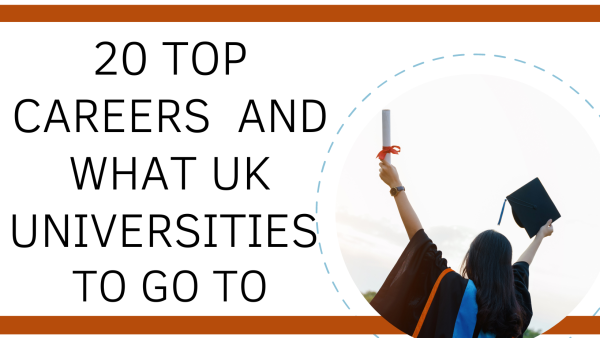
20 Top careers for school leavers and what UK Universities to go to. 

As a school leaver, deciding on the right career path can be overwhelming. With so many industries and sectors to choose from, it can be challenging to know where to start. In this post, we’ll take a look at the top 20 industries and sectors that school leavers commonly start their careers in and suggest some suitable universities for each industry.

  1. Accounting and Finance: The University of Warwick has a highly respected Accounting and Finance program, as does the University of Manchester and the London School of Economics.
  2. Advertising and Marketing: For Advertising and Marketing, the University of Leeds, the University of Manchester, and the University of Nottingham are all excellent options.
  3. Agriculture: The University of Reading is known for its strong agricultural program, as is Harper Adams University.
  4. Arts and Culture: The University of Edinburgh and the University of Glasgow are two well-regarded options for those interested in pursuing a career in Arts and Culture.
  5. Business: The University of Bath, the University of Leeds, and the University of Manchester are all excellent choices for those looking to start a career in business.
  6. Construction: The University of Surrey, the University of Nottingham, and the University of Leeds all have highly respected construction programs.
  7. Education: For those interested in Education, the University of Durham, the University of Exeter, and the University of Nottingham are all highly regarded institutions.
  8. Engineering: Imperial College London, the University of Manchester, and the University of Bristol are all highly respected universities for Engineering.
  9. Environmental Management: The University of Leeds, the University of East Anglia, and the University of Exeter all have highly regarded Environmental Management programs.
  10. Healthcare: The University of Bristol, the University of Leeds, and the University of Manchester all have highly respected programs for Healthcare.
  11. Hospitality and Tourism: For those interested in Hospitality and Tourism, the University of Surrey, the University of Leeds, and the University of Birmingham are all excellent choices.
  12. Information Technology: The University of Warwick, the University of Manchester, and the University of Nottingham are all highly respected universities for Information Technology.
  13. Law: The University of Durham, the University of Bristol, and the University of Nottingham are all highly regarded institutions for Law.
  14. Media and Communications: The University of Leeds, the University of Nottingham, and the University of Sheffield all have highly respected Media and Communications programs.
  15. Pharmaceuticals: The University of Manchester, the University of Nottingham, and the University of Bristol are all excellent choices for those interested in pursuing a career in Pharmaceuticals.
  16. Politics: The University of Oxford, the University of Manchester, and the London School of Economics are all highly respected universities for Politics.
  17. Public Relations: The University of Leeds, the University of Manchester, and the University of Nottingham all have highly regarded Public Relations programs.
  18. Retail: The University of Leeds, the University of Manchester, and the University of Nottingham are all excellent choices for those looking to start a career in Retail.
  19. Science: The University of Warwick, the University of Manchester, and Imperial College London are all highly respected universities for Science.
  20. Social Work: The University of Bristol, the University of Leeds, and the University of Manchester all have highly respected programs for Social Work.

In conclusion, the industries and sectors listed above provide a starting point for school leavers interested in exploring their career options. While Oxford and Cambridge universities are highly regarded for many fields, there are many excellent universities in the UK that offer top-quality programs in a variety of industries and sectors. If you want to do more research, I have posted about “The Top 10 UK University Search Engines for School Leavers” I hope that it helps.

#NavigatingYourCareer #CareerPaths #UniversityOptions #SchoolLeaversUK #TopIndustries #UKUniversities #FutureCareers #ChoosingYourPath #ExploringOptions #navigatingyourcareer

3 Career Mistakes You Need to Avoid

Are you feeling stuck in your current job? Are you eager to advance your career but unsure of how to do so? Many people make common career mistakes that hold them back from achieving their goals. I myself have often stayed in a job role longer than I should have. I have been a retailer, butler, tailor and now a recruiter, so moving across sectors or industries can be done. Here are three mistakes to avoid and how to overcome them:

Not Saying That You Are Changing Jobs

As Malcolm Forbes once said, “The biggest mistake people make in life is not trying to make a living at doing what they most enjoy.” It’s natural to want to hide the fact that you’re looking for a new job, but not telling friends and family could be harming you. People who care about you can offer valuable support and connections that may help you land your dream job. Don’t be afraid to reach out for help when you need it.

Applying to the Same Job You Already Have

John D. Rockefeller once said, “Don’t be afraid to give up the good to go for the great.” If you’re looking to advance your career, why settle for the same job with slightly better pay? It’s comfortable to do what you know, but learning new skills is what will enable you to grow and achieve your goals. Look for jobs that excite you and challenge you to develop new skills.

Not Networking – Only 60% of Jobs are Advertised

As Steve Jobs once said, “Your work is going to fill a large part of your life, and the only way to be truly satisfied is to do what you believe is great work.” Only 60% of jobs are advertised on the internet and in job sheets. Many jobs are filled by people who have connections or who are recommended by someone within the organization. Take advantage of networking opportunities to meet new people and make meaningful connections. Use LinkedIn as a dating site for jobs, attend corporate open days in the industries you want to work in, and join professional organizations to expand your network.

Don’t settle for a career that doesn’t fulfil you. As George Eliot once said, “It is never too late to be what you might have been.” With the right mindset and approach, you can overcome common career mistakes and achieve your career aspirations.

I usually post twice a week, please subscribe to make sure you get the best career and education advice.

I have more great advice and tips on my blog please explore!

#CareerMistakes #CareerAdvice #CareerTips #CareerDevelopment #CareerSuccess #CareerGrowth #CareerGoals #ProfessionalDevelopment #JobSearch #Networking

Website Powered by WordPress.com.

Up ↑